
Martin County Ten-Day Arrest Reports
The sheriff's MCSO Recent Bookings page covers arrests in Martin County across the last 10 days. That makes it the county's multi-day source. A same-day slice cannot compete when an entry posts late. It helps when the booking date is unknown. The window has edges, though. It is not a lifelong arrest log, a fixed weekly bulletin, or proof that anyone remains in custody. Someone listed may have bonded out already. Older bookings roll off after day ten. Protected juveniles, exempt victim information, and delayed affidavits may be missing from it. For custody now, use the inmate search or Booking Unit; for what happened after filing, use the Clerk.
Read Martin County Arrest Reports
Start with the newest booking date and work backward. Similar names and shifting status fields make a one-field match risky.
- Open the official Recent Bookings source and note the access date.
- Scan the complete 10-day span rather than assuming all weekend records share one posting day.
- Match name, booking time, arresting agency, and charge description.
- Use the Jail Inmate Search for present county custody.
- Use MCSO Records or the arresting police department for the underlying report.
- Use the Martin County Clerk Records Search for docket events and disposition.
Want only the newest entries? The Arrested Today page explains why Martin County lacks a separate verified 24-hour feed.
Martin County Report Entry Fields
Each multi-day entry is an index, not the full probable-cause affidavit. The roster format documents several related fields. The recent-bookings view may show a different set.
| Field | How to read it |
|---|---|
| Booking date and time | When jail intake was recorded, not necessarily report upload time. |
| Name and age | Basic identifiers that still require careful matching. |
| Arresting agency | The office that can hold the incident or arrest report. |
| Charge | An charge at booking, subject to later filing changes. |
| Bond | An amount or condition, not evidence that release occurred. |
| Status | A time-sensitive custody field. |
| Photo | May be available for a current inmate, but not promised on the recent feed. |
The Clerk's official court-search entry shows where a later criminal case can be checked.
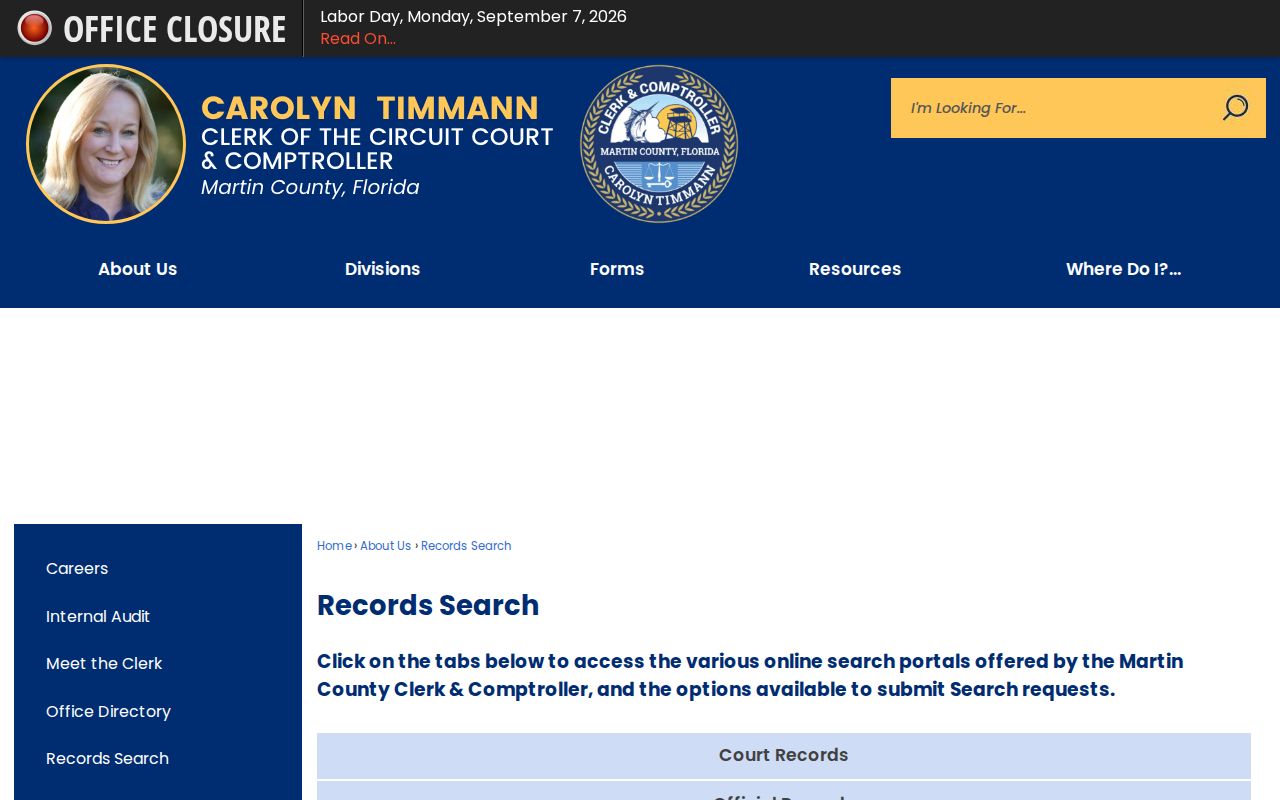
This docket tracks the case, not the booking list.
Weekend Martin County Arrest Delays
MCSO defers affidavit uploads that would land on a weekend or observed holiday. Paperwork waits for the next business day. So a person can be booked before the affidavit shows up. Monday then looks crowded with documents. The arrests behind them may have occurred across several different days. Don't call that cluster a crime surge. Posting volume is not incident volume. Compare each booking timestamp with its document date, confirm with the arresting agency if the affidavit matters, and expect protected details to stay absent.
Bond Fields in Arrest Reports
MCSO's Services, Procedures and Fees page spells out how bonds get paid. Money orders and cashier's checks work. Cash does not. A roster's bond figure still proves little. It cannot confirm the bond was posted, accepted, or followed by release, because holds, court orders, and status updates all shape custody. Read bond and status fields together. Then call the Booking Unit at 772-220-7220. A projected release date is not a promise either, since a new hold, a transfer, or a court action can move it. Court dockets carry later bond orders, while the jail alone confirms county custody at the moment you ask.
Older Martin County Arrest Records
The online window closes after 10 days. The government record behind it can remain requestable. Florida's General Records Schedules point criminal-justice agencies to GS2. That schedule holds separate series for arrest reports, affidavits, booking material, jail commitments, photos, warrants, bond information, and dispositions. Retention varies by series and offense level.
A retention schedule sets a minimum, not a guarantee. It does not keep a booking page or photo URL online. Litigation holds, audits, pending requests, and agency needs can stretch retention further. The State Archives lists no Martin-specific collection of routine modern jail photos or rosters.
Start an older report with MCSO Records. Then try the arresting agency. The Clerk answers for the case result. Name the item you want, whether a booking card, photograph, affidavit, police report, disposition, or warrant, and give a narrow date range. The MCSO request portal is the durable channel once the public listing expires. Keep its request number and security key private.
Narrow requests cut mistaken matches. They also help the custodian locate the right series, so add the approximate arrest date and arresting agency when known. A redaction may reflect a juvenile rule, victim protection, an active investigation, or another lawful exemption rather than the absence of the event itself.
Martin County News Arrest Coverage
Newspapers fill in what official rosters leave out. TCPalm crime coverage picks certain Martin County arrests and often adds bond amounts, agency attribution, or extradition details. WPTV's Martin County section takes a similar approach with arrests and ongoing investigations. None of these outlets runs a full booking log. Hometown News once carried a dated Martin County Arrest Report column, though that example sits in the print archives rather than a live feed. For a sense of how selective this route is, the TCPalm crime section shows which cases get ink and which never do.

Newspaper coverage gives Martin County arrest stories useful context. Dates and named sources give readers something firm to lean on. Jail and court records still control. Unofficial indexes operate alongside the news. RecentlyBooked claims a longer Martin County span. Busted Newspaper and Treasure Coast FL Mugshots also organize public booking material. These sites are secondary at best. They can run stale, and they cannot confirm who is actually in custody. The RecentlyBooked Martin County page shows that third-party framing in action.
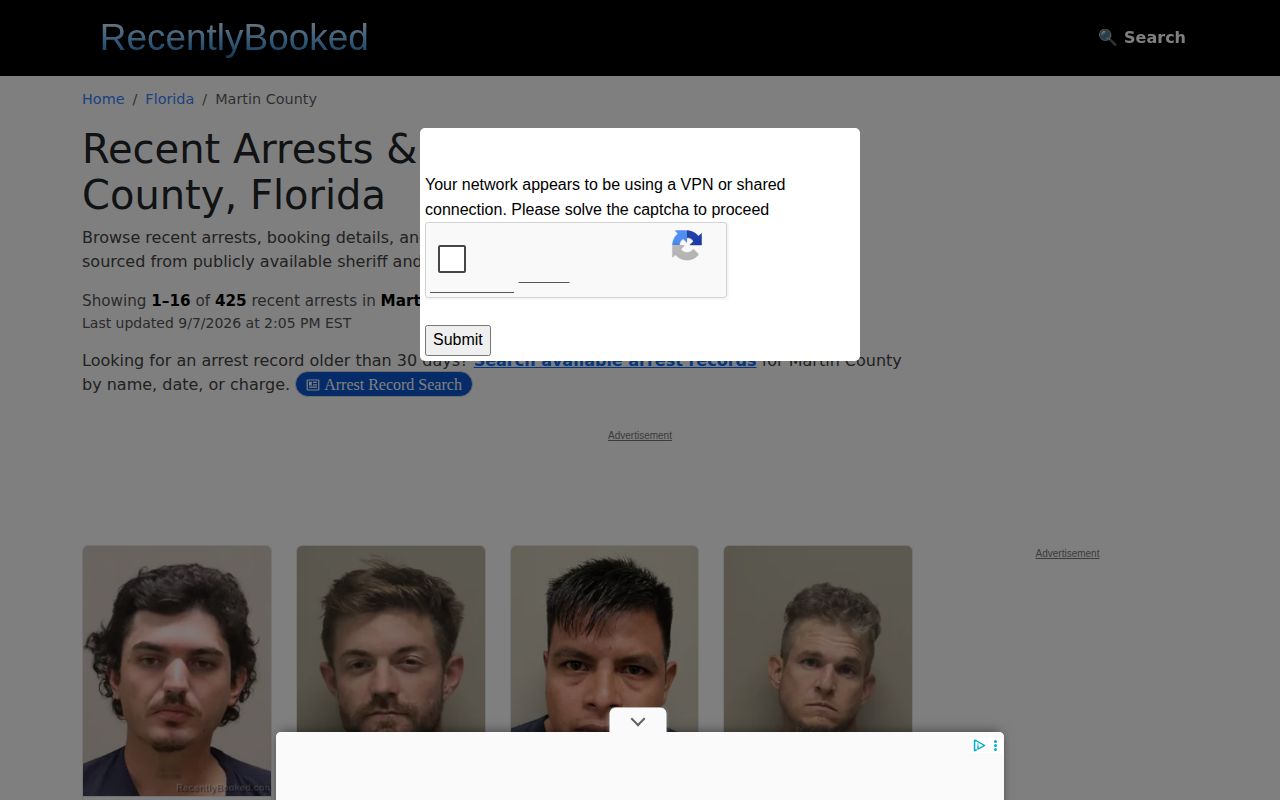
Treat an unofficial entry only as a lead. Then confirm the arrest event and its outcome through MCSO and the Clerk.
Request Expired Martin County Reports
A ten-day listing window is brief. The arrest record itself lasts far longer. Once an entry rolls off, start collecting details. Pull together the date, the person's name, and the arresting agency. Then contact the custodian. MCSO Records is the first stop for sheriff reports and jail-created booking material. A city police department may hold its own incident report. Filed court records sit with the Clerk. Docket events, judgments, sentences, and dispositions live there too, where public access permits.
The MCSO electronic portal accepts a specific public-record request and returns tracking information. Name exactly what you want. Ask for each record by name. Say booking card, arrest affidavit, booking photograph, probable-cause affidavit, or police report. Each item serves a different purpose. An affidavit lays out the basis for an arrest. A booking card documents the jail's intake of that person. A court disposition records the judicial result. Its charge language may differ from the original blotter entry.
Florida's GS2 schedule groups criminal-justice records into separate series with different minimum retention periods. Offense level matters. So do record type, legal holds, audits, and pending requests. None of that turns the sheriff's rolling webpage into an archive. The Florida State Archives holds no Martin-specific collection of routine modern MCSO booking files.
Keep your portal request number and security key private. If a response arrives with redactions, ask which exemption applies. Blank space in a document does not mean no arrest report exists.
Arrest Reports Are Not Convictions
A blotter entry captures only the arrest itself. The court file tells the rest. Search the Clerk docket for the disposition, meaning the court's recorded result, and keep that wording separate from the original charge.
Treat booking photographs with the same care. A third-party listing is a lead, never the final legal record.